


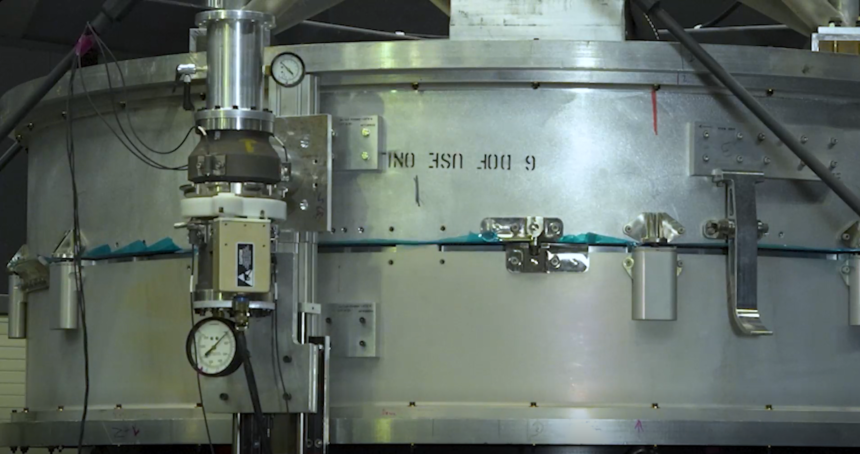
For NASA’s next generation of deep space exploration missions, spacecraft may need to refuel in Earth orbit before traveling farther into the solar system. This requires a specialized device called a cryocoupler, which connects spacecraft to orbital propellant depots—acting as space gas stations.
Cryocouplers face challenges in transferring super-cold cryogenic fluids like liquid hydrogen and oxygen without losing performance. These propellants must remain at temperatures below -300°F, demanding advanced materials and seals. Travis Belcher, project manager at NASA’s Marshall Space Flight Center, emphasized that in-orbit cryogenic refueling remains one of spaceflight’s toughest engineering challenges.
Ground-based couplers used for the Space Launch System (SLS) are unsuitable for orbit. They’re designed for quick, manual reconnection during launches and cannot withstand space’s harsh conditions. NASA tested a cryocoupler developed by L3Harris, which offers automated attachment/detachment and durability for space environments.
The cryocoupler was tested at NASA Marshall using liquid nitrogen at -321°F to simulate extreme cold. Tests included thermal contraction, flow dynamics, and misalignment scenarios. The device is designed to handle docking misalignments, a critical feature for orbital refueling.
Belcher noted that current testing focuses on basic functionality, with future campaigns tailored to specific missions. The project is part of a 2022 Announcement of Collaboration Opportunity, leveraging NASA Marshall and Glenn Research Center resources.
The Cryogenic Fluid Management Portfolio oversees development. For more details, visit NASA’s official page.